Saturday Career Workshops: Signs, Symbols, & Semiotics
As a first-generation family member, I learned to navigate foreign transportation hubs at a young age. We relied on visual communication through signs and symbols to understand spoken and unspoken messages. I have always been fascinated by how people can move through an unfamiliar airport, locate food, restrooms, and luggage with minimal guidance and limited knowledge of the destination’s language.
Organization: The One Club for Creativity
Course Level: High School Sophomores and Juniors
Duration: 3-hour session
Workshop Overview
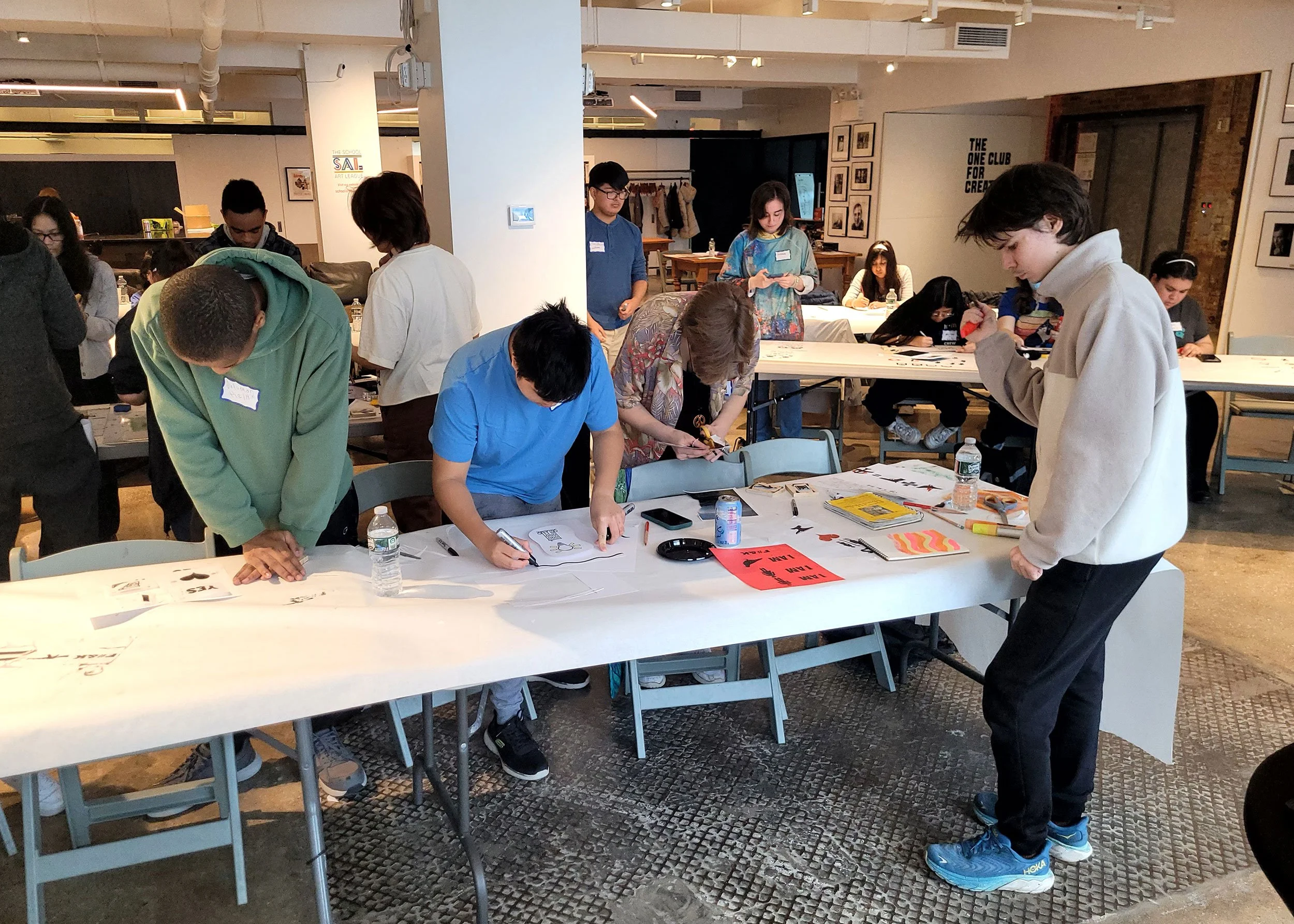
I led and facilitated a Signs, Symbols, & Semiotics printmaking workshop, sharing my expertise and experiences as a first-generation student and professional with high school students aspiring to pursue careers in art and design after graduation. Sponsored by The One Club for Creativity, the parent organization of the Art Directors Club and Type Directors Club, and the New York City Department of Education, these free workshops are offered to high schools across the five boroughs. Workshop sizes range from 20 to 50 students, with an increasing number of first-generation attendees. Prominent artists and designers participated by sharing industry insights, leading projects, and conducting critiques, with funding provided by the Coyne Family Foundation.
Project Brief
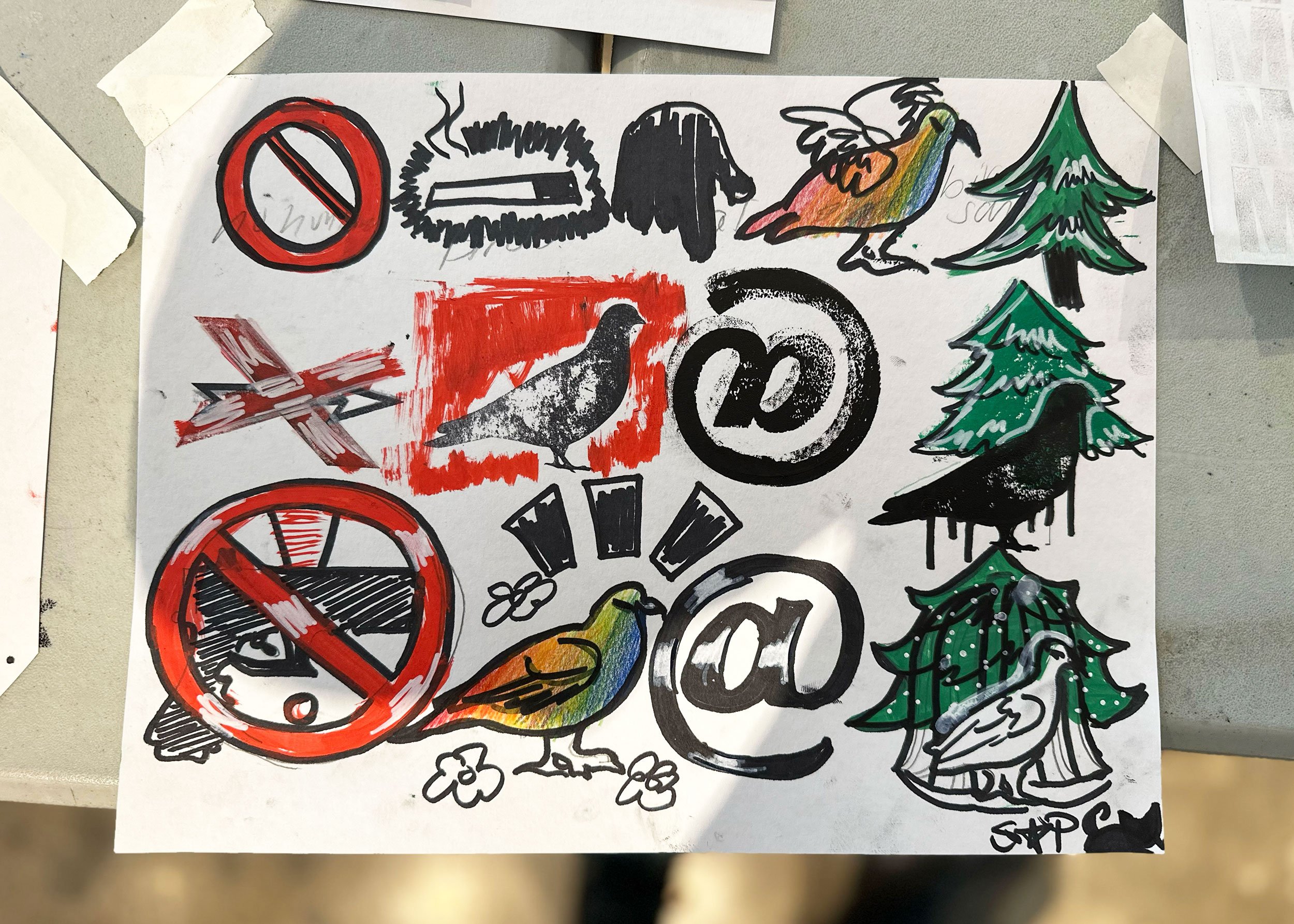
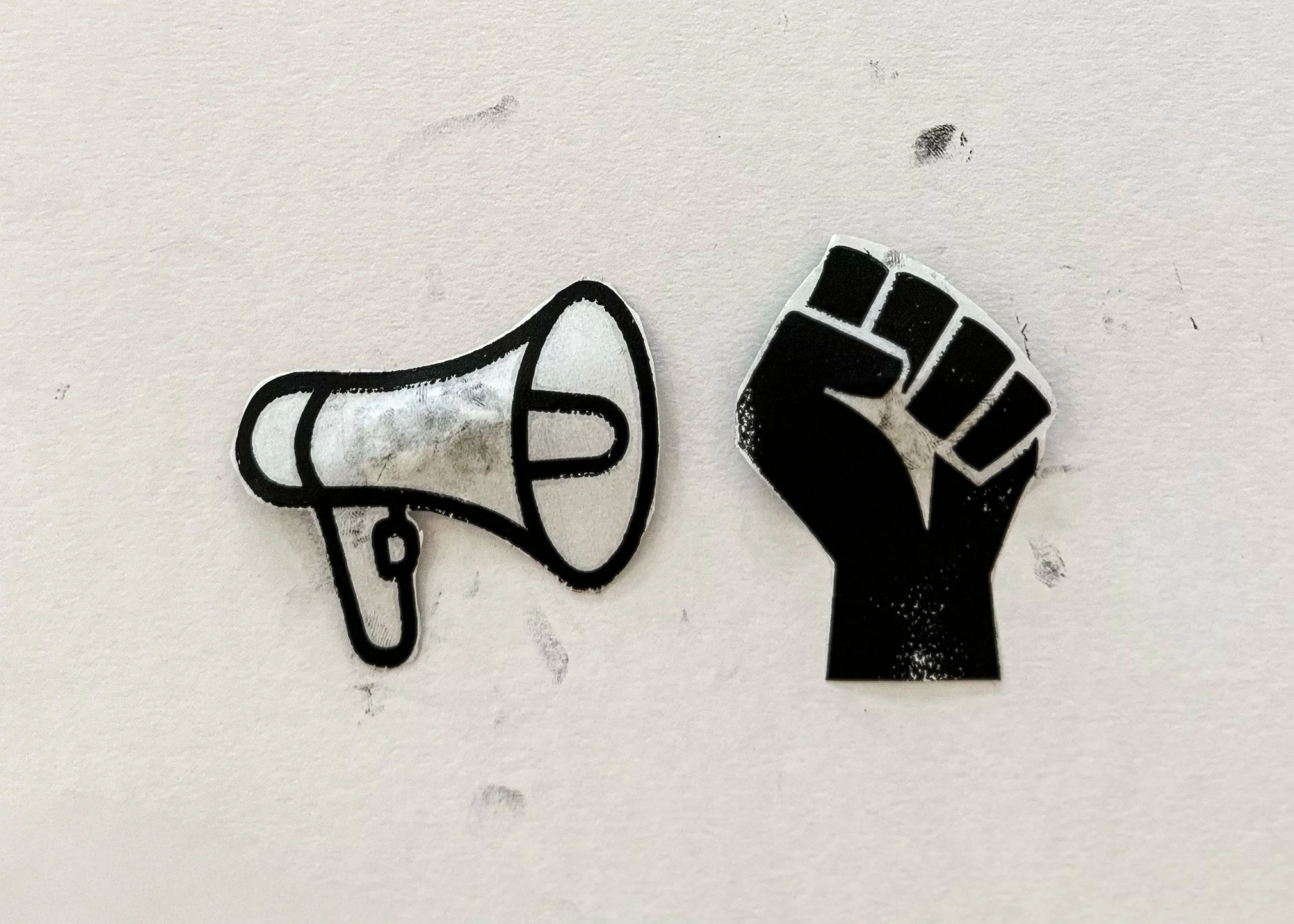
Develop and print (manually press) one or a series of symbols that convey a concept or message. Possible themes include identity and belonging, social or cultural change, environmental issues, global connections, everyday objects given new meanings, or simply a striking visual that sparks curiosity. The choice is yours. Use the supplied custom laser-cut rubber stamps as a starting point. You are free to draw, cut, and modify your printed symbols, create new symbols, or add words to expand your ideas.
Learning Objectives
Introduce nontraditional learners and first-generation students to career pathways in design.
Understand how the decisions a designer makes in concept and craft shape audience perception of signs and symbols.
Constraints & Parameters
Students worked with three colors for symbols and signs: black, red, and green. Color pencils, markers, and other drawing tools were also available.
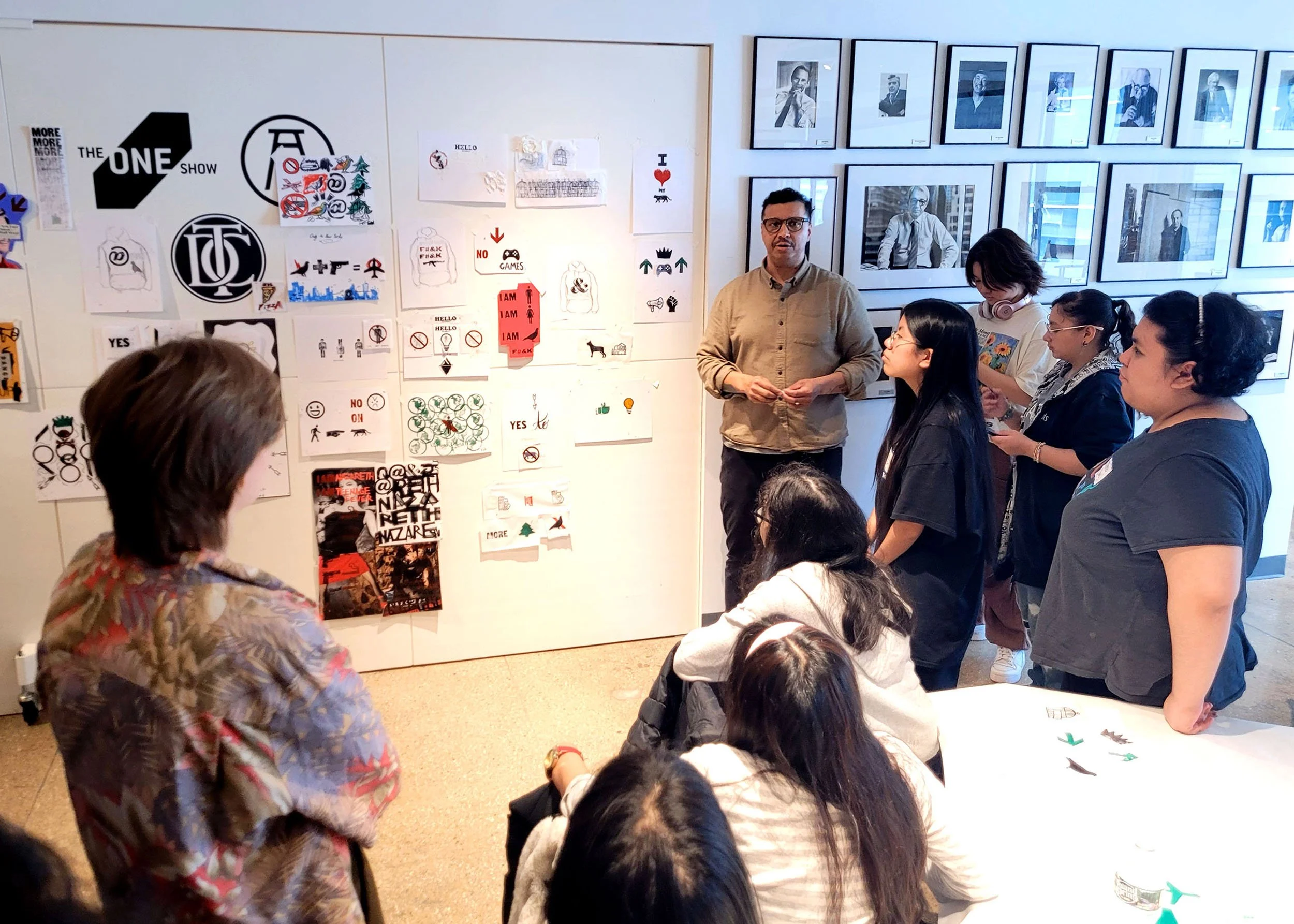
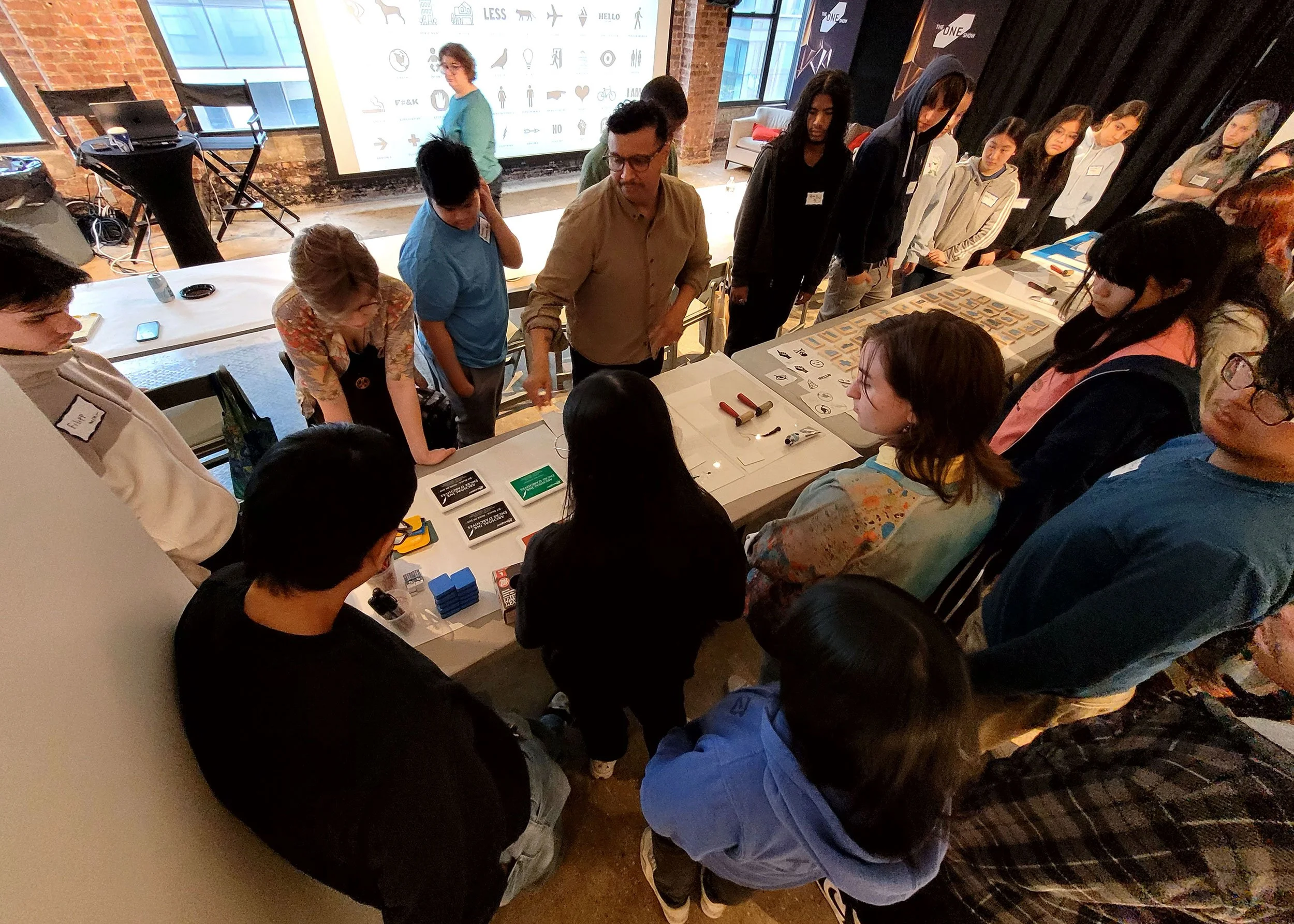
The session was three hours: 30 minutes lecture, 1 hour 45 minutes hands-on design and printing, and 15 minutes gallery pin-up and group review.
Supplies I provided included premium paper stock, stamp pads, inks, burnishers, cutting mats, X-Acto knives, scissors, rulers, masking tape, pencils, and markers.
Additional resources from The One Club included flat tables and open wall space for displaying work, pushpins, metal rulers, disinfecting wipes, and access to a sink for cleanup.
Deliverables
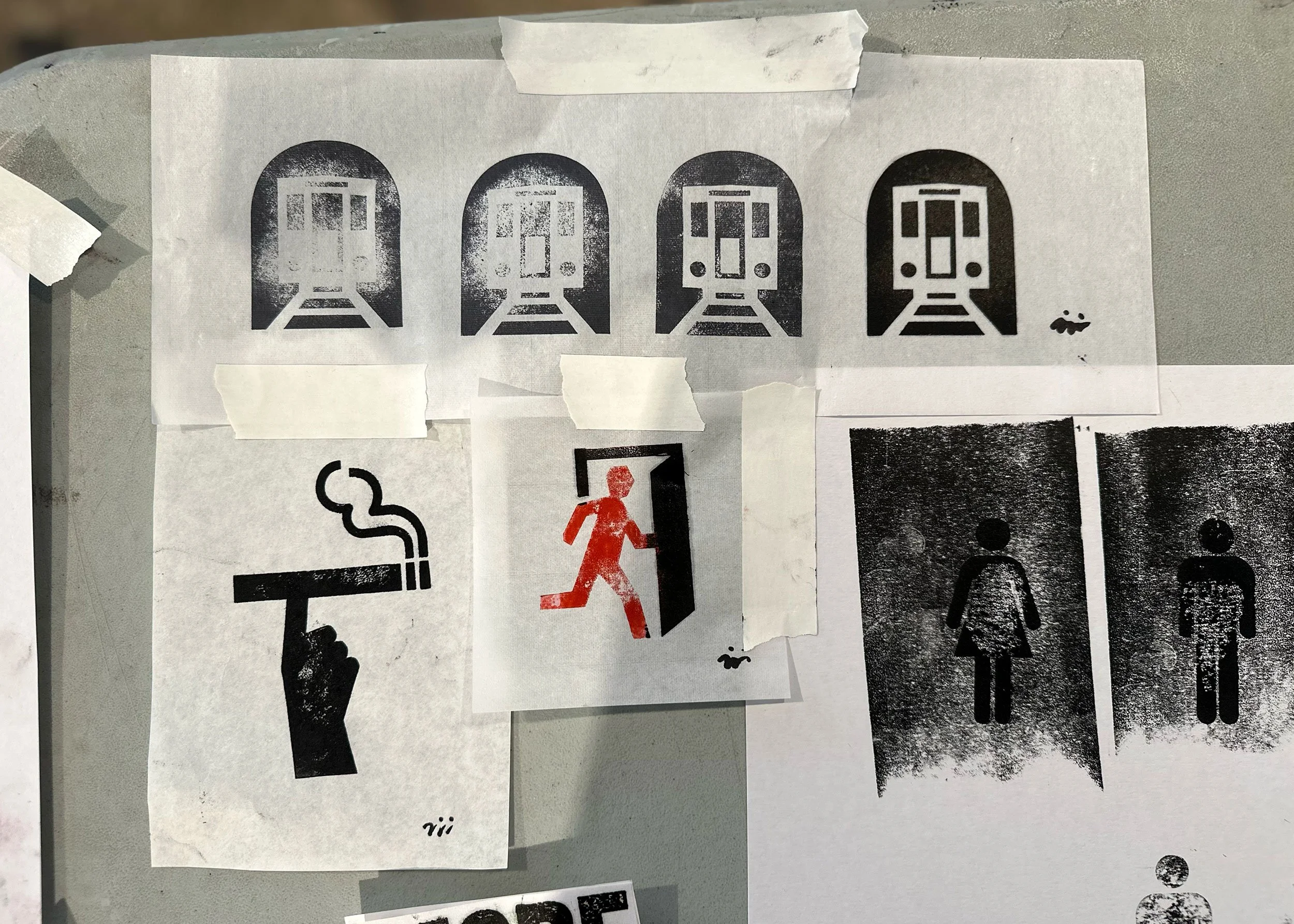
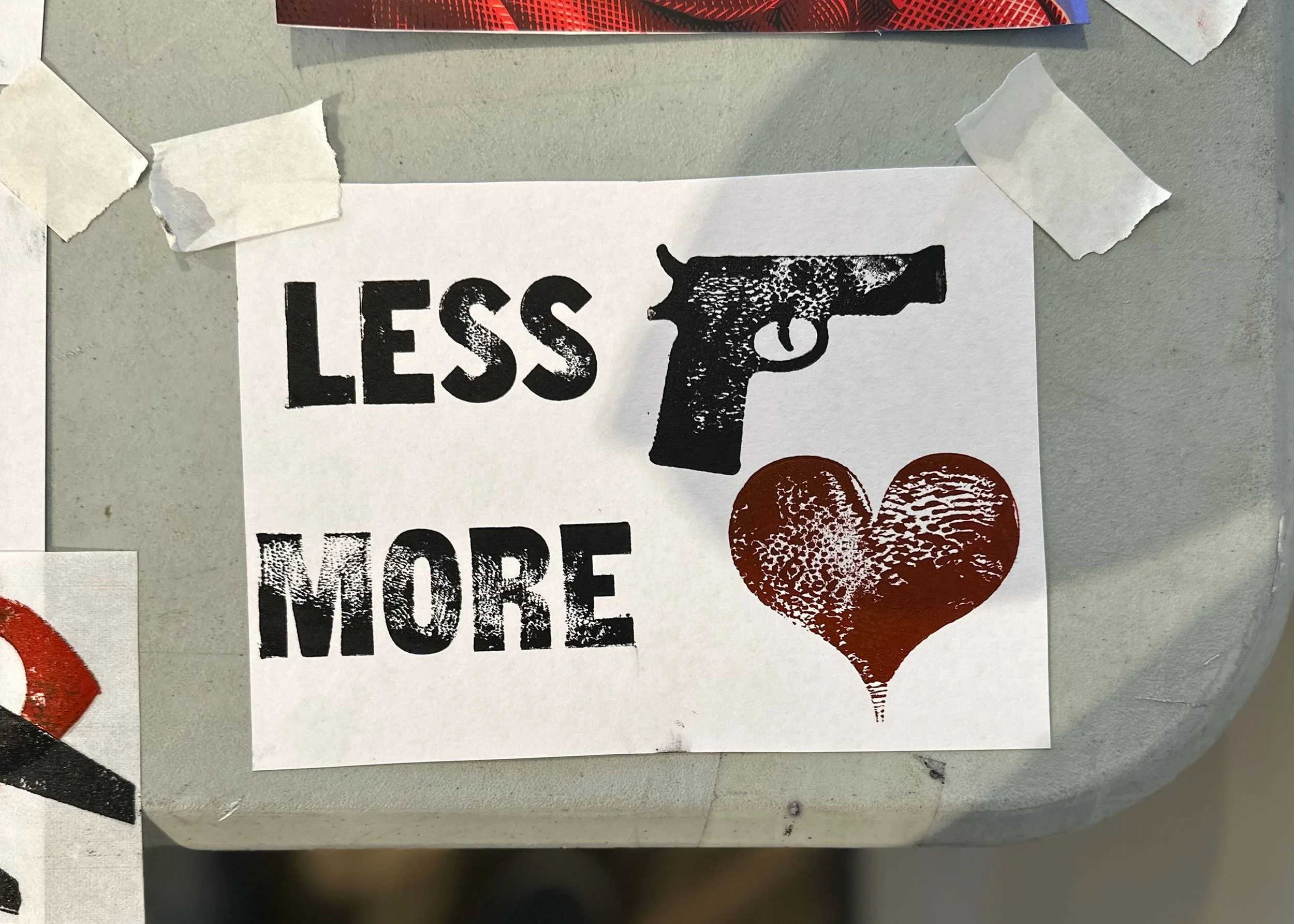
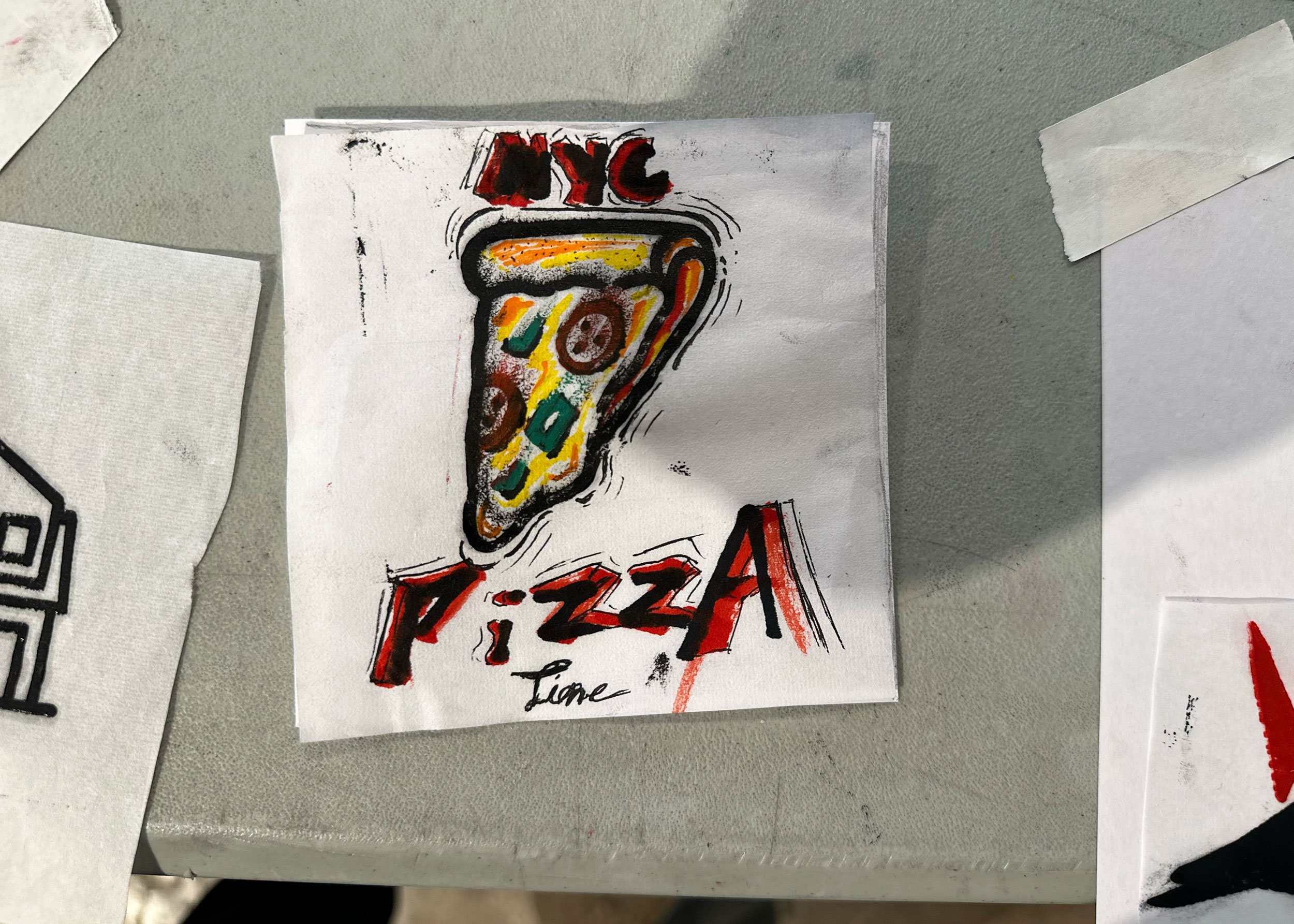
Original rubber-stamped prints of symbols, rebuses, and illustrative solutions by workshop attendees.
Thoughts & Observations
Being a native New Yorker, I was honored to be invited to present in this outreach program. Participants discovered how combining unrelated elements like a rebus, pictogram, or ideogram could create new messages, and they dove right into hands-on mark-making.
Working without computers or software, they developed thoughtful and expressive solutions, with outcomes that rivaled the usual laser-color outputs in design workshops.
They were given the creative freedom to combine drawings and collage with their printed symbols to support and amplify their message. Their ideas ranged from simple to complex, from social to political, and from personal to global. And, of course, they kept anything they printed.
Thanks to Stephen Drakes for the photographs in this post.