Film Posters: Before & After
In a portfolio preparation course like this one, students revisit projects from previous classes that may already be portfolio-ready or need further refinement. Through critique, discussion, and multiple iterations, they strengthen both concept and execution. These before-and-after film poster examples show how the work evolves through this iterative process.
Institution: Art Institute of New York City
Course Level: Portfolio Preparation, Advanced
Duration: 4 weeks
Sample I: The Birds
Before (left): This poster was presented as final and completed at the start of Portfolio Preparation and had received a high grade. While the absence of the birds and the abstract, frenetic line work showed potential, the textures, level of craft, and visual language felt underdeveloped and overly technical. The hierarchy lacked scale and ingenuity, and the abrupt, opaque band at the bottom felt out of place. There was also a misspelling in the film title.
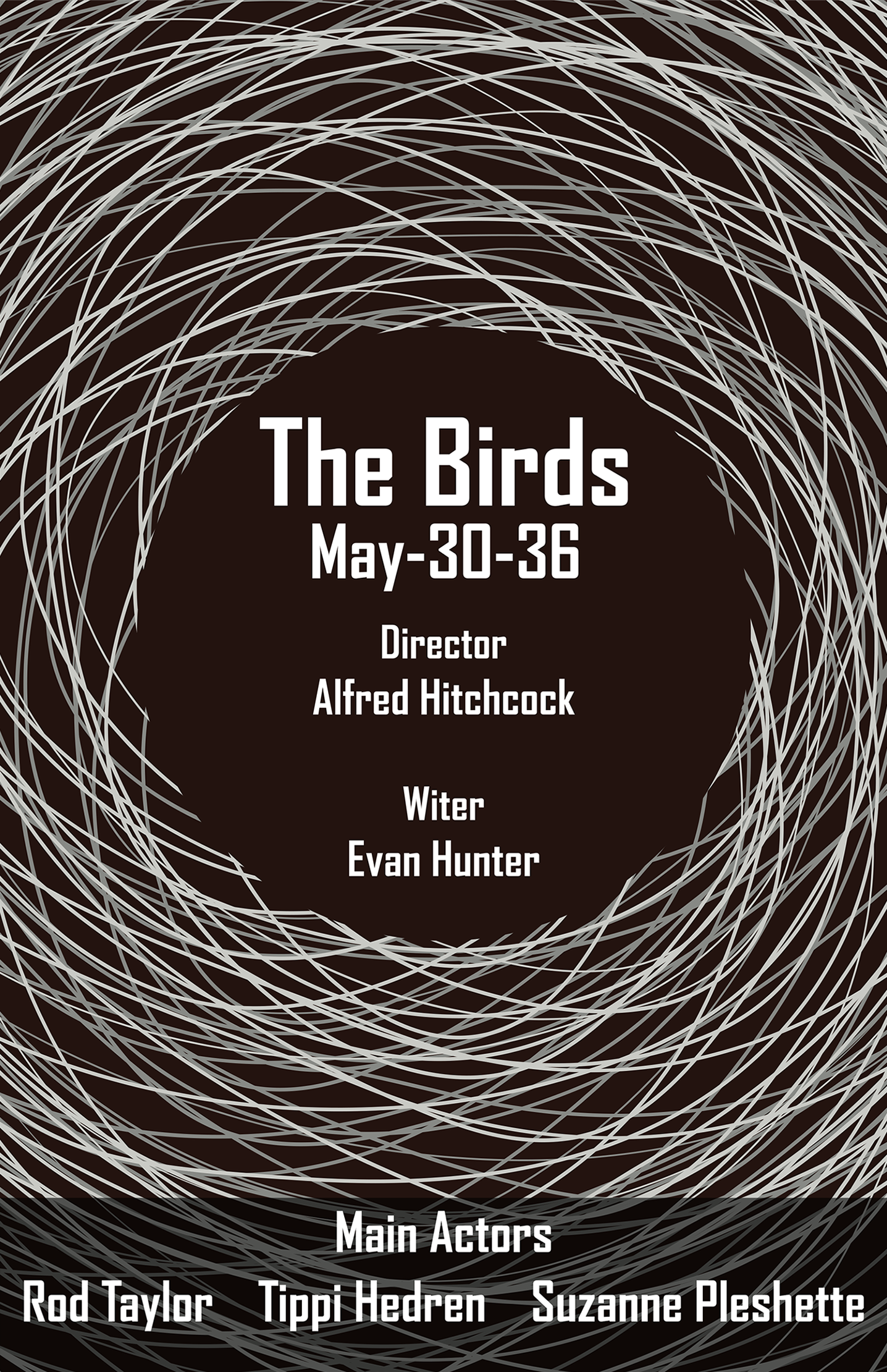
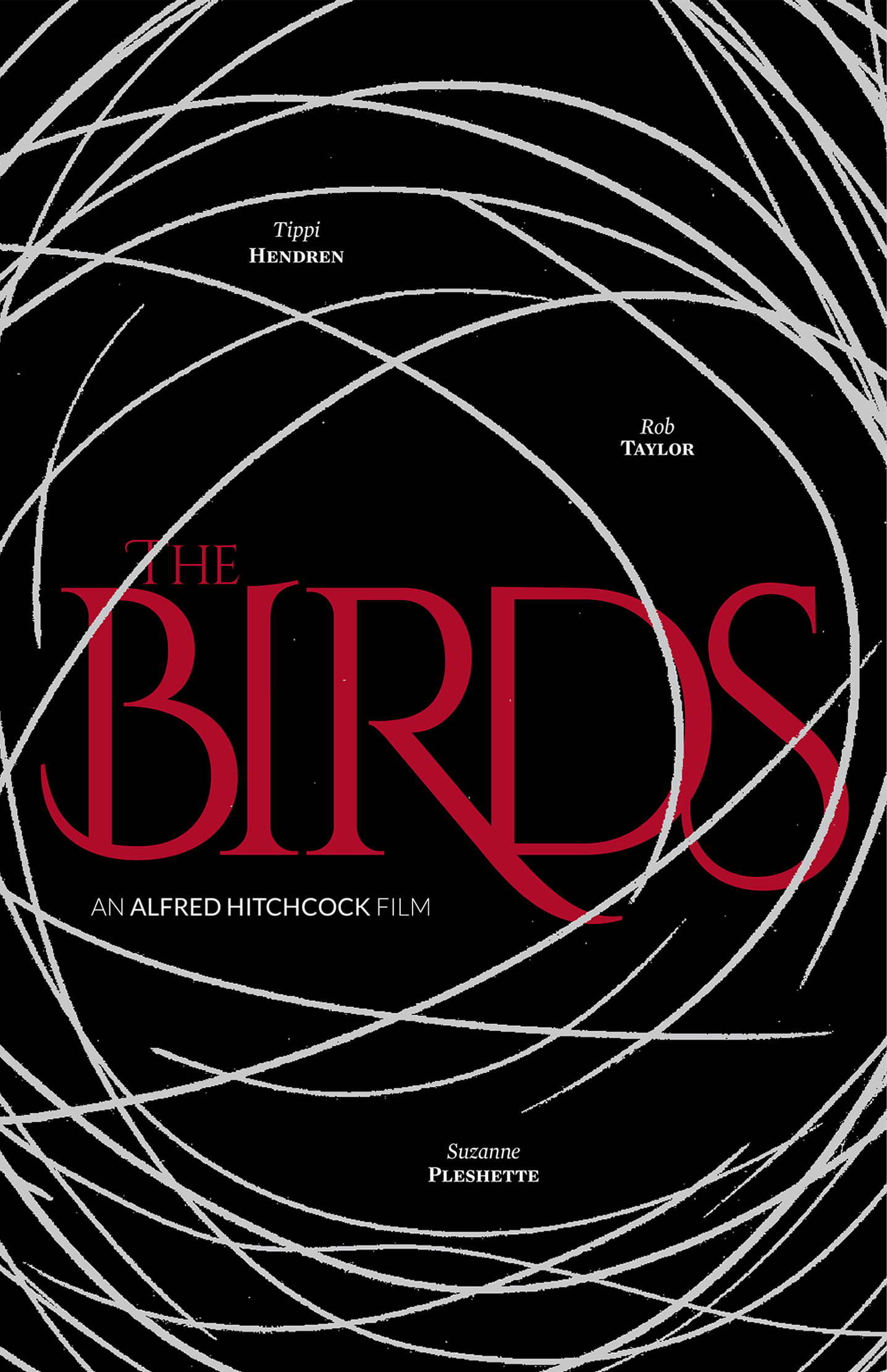
After (right): Through class sessions, feedback, and discussion, the poster was revised and refined across 20 – 25 variations. The student reimagined the abstract line work with hand-drawn elements and expanded their exploration of typefaces, leading to a composition with thoughtful secondary and tertiary typography that better supported the film. Comparing the before-and-after versions helped the student understand the iterative process and see how the design evolved while staying true to the original concept.
Student work by Angie Vasquez
Sample II: Psycho
Before (left): This poster was initially presented as final. Two-thirds of the design featured flat, playful illustrations that were underdeveloped and did not align with the film. The conceptual direction was unclear, relying on a clichéd reflection of a pivotal scene. I learned the student enjoys illustration, but the prompt for this poster was to emulate another artist’s style, explaining the neutral choice of typefaces. “Your concept will lead you to your typography,” a mantra I repeat during feedback sessions.
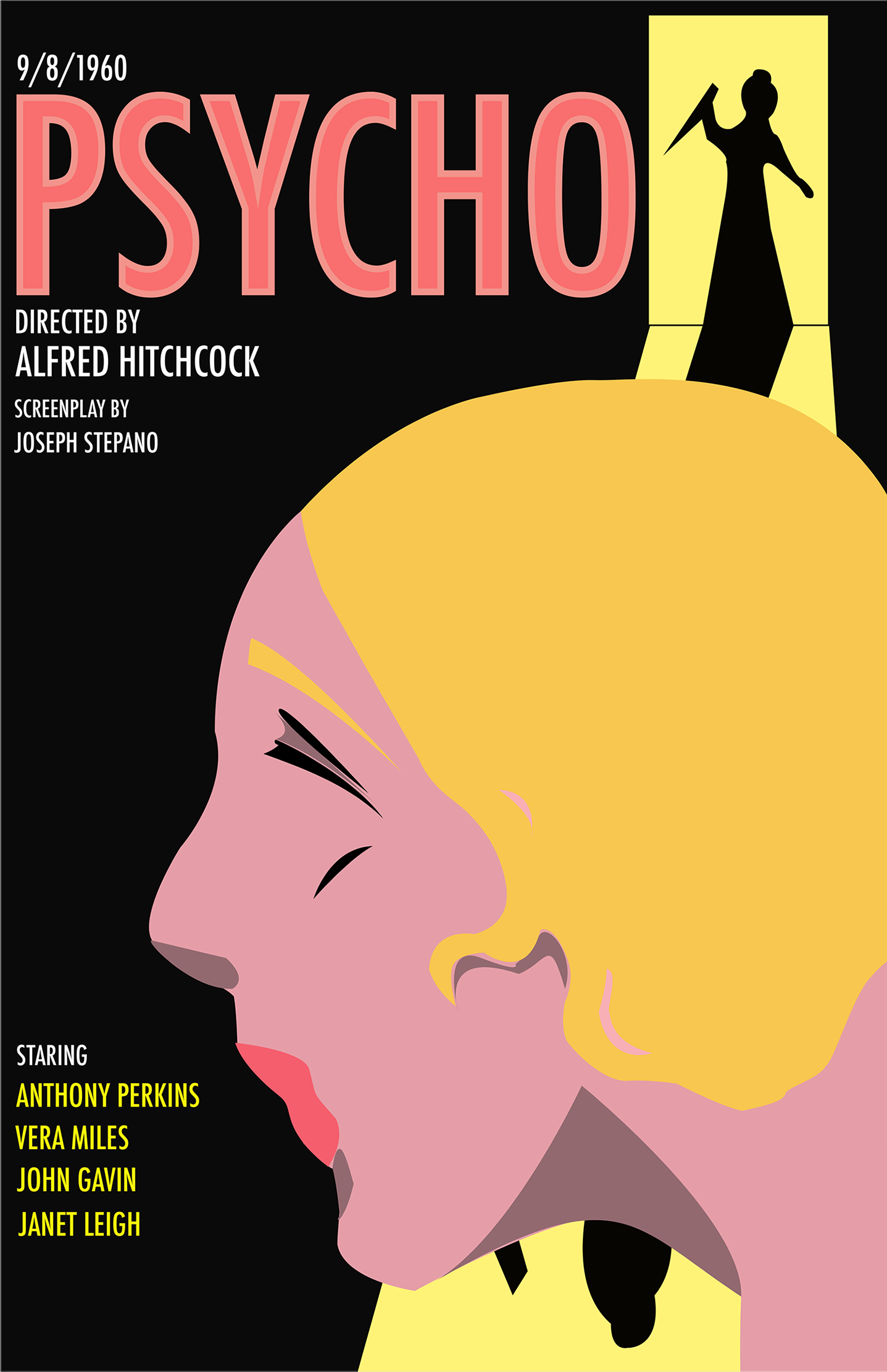
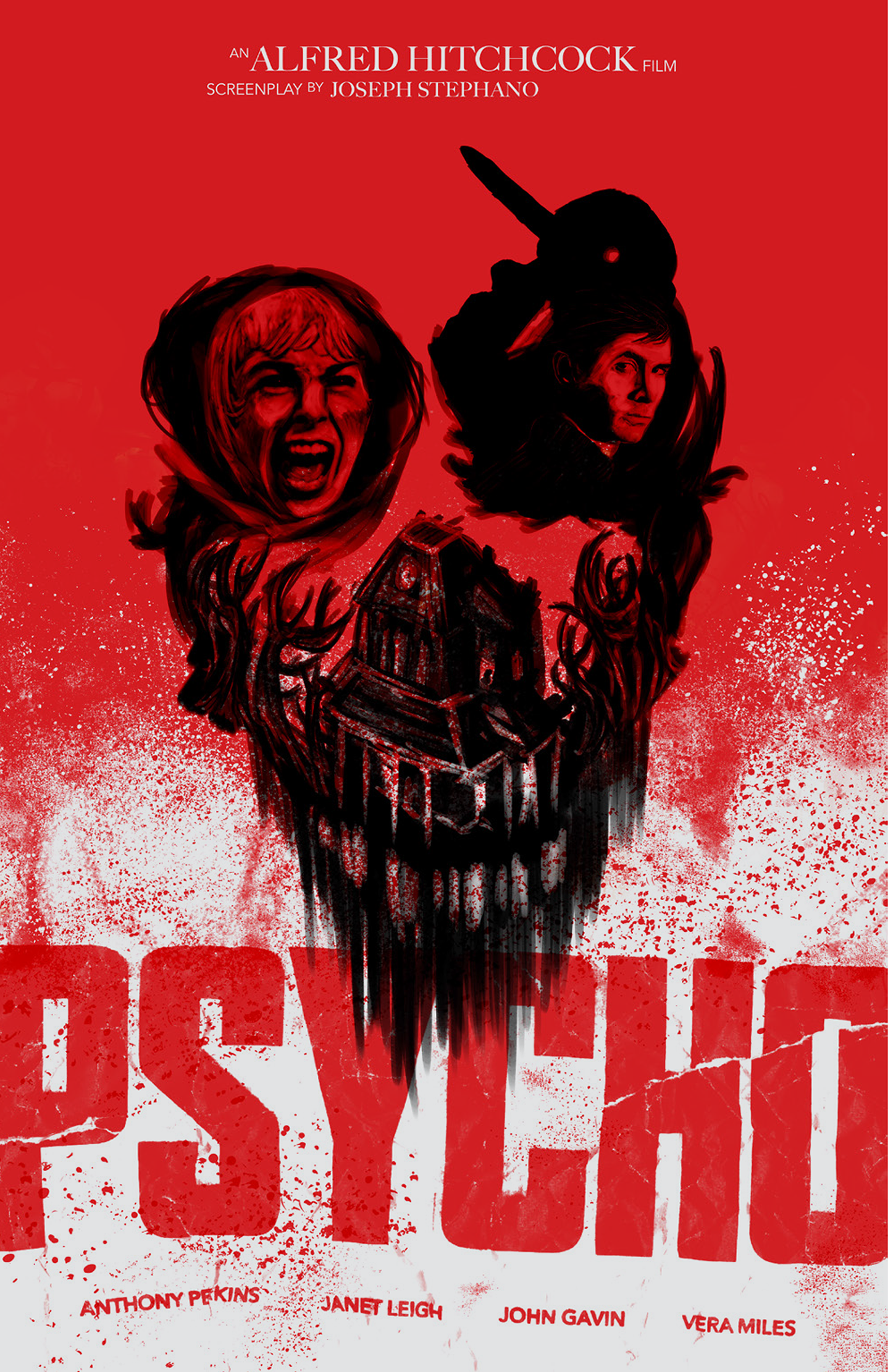
After (right): Through a series of conversations and 20–25 variations, I encouraged the student to let go of the original prompt and develop the artwork in their own illustrative style. The result was dramatically different: a hands-on approach to nearly every design element, from the original photocopied textures and gritty typography to an understated yet iconic color palette, with each conceptual layer building on the previous one.
Student work by Gabriel Aponte
Learning Objectives
Curate, improve, and build upon past projects to showcase in the portfolio.
Deliverables
An industry-specific portfolio that demonstrates how you think, solve problems, and respond to communication design briefs, giving prospective employers insight into your creative process and decision-making.
Thoughts & Observations
This approach and the iterative process give students skills and insights that extend beyond the studio classroom. It encourages them to ask questions, stay curious, and push themselves further even when no one is asking. There is nothing more rewarding than watching a student discover their full potential in a final iteration.
“No masterpiece was ever created by a lazy artist.” – Salvador Dali